When you view your remplacement offers, you may notice that an offer has been split into multiple offers based on its periods. This feature, called automatic fragmentation, is designed to optimize the search process by allowing multiple substitutes to share an offer.
 How the automatic fragmentation works? How the automatic fragmentation works? |
When a remplacement offer is published, fragmentation is triggered based on the rules and timelines set by organizations. It occurs if:
- No substitute has accepted the original offer.
- The organization chooses to allow fragmentation to maximize the search for substitutes.
Thanks to this automatic fragmentation, multiple substitutes can cover the original remplacement offer to meet the establishment's needs.
| Fragmentation behavior |
Fragmentation settings may vary depending on the organization's configuration.
For example, an organization could implement all fragmentation levels to initially offer the replacement as a single block (prioritizing stability for children or students) before gradually fragmenting the offer:
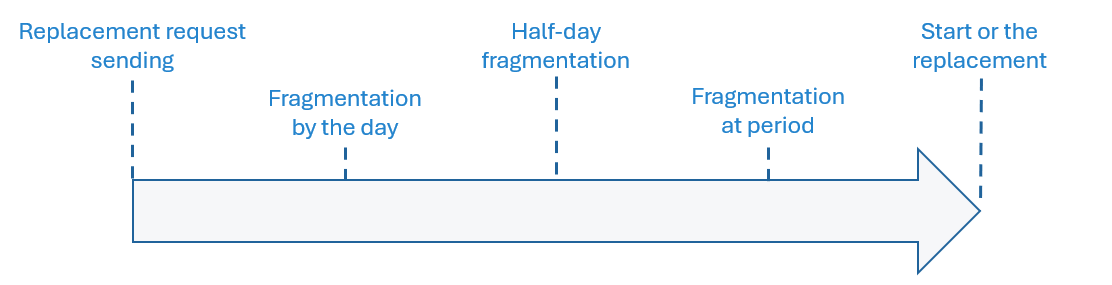
Please note that the delays between each selected fragmentation level may vary from one organization to another.
| Difference between an offer with multiple periods and a fragmented offer |
Before fragmentation
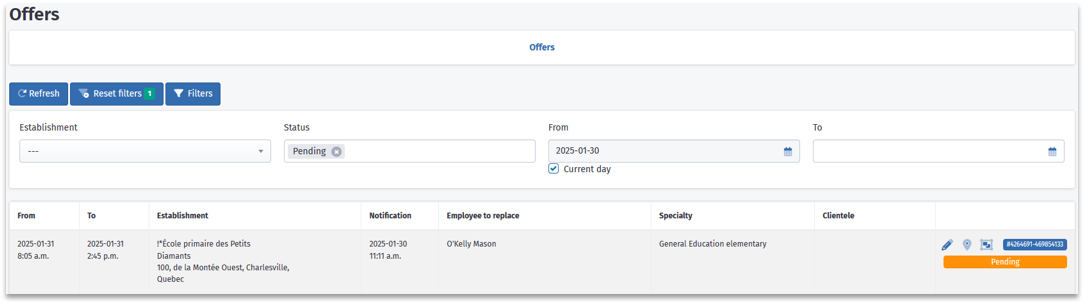
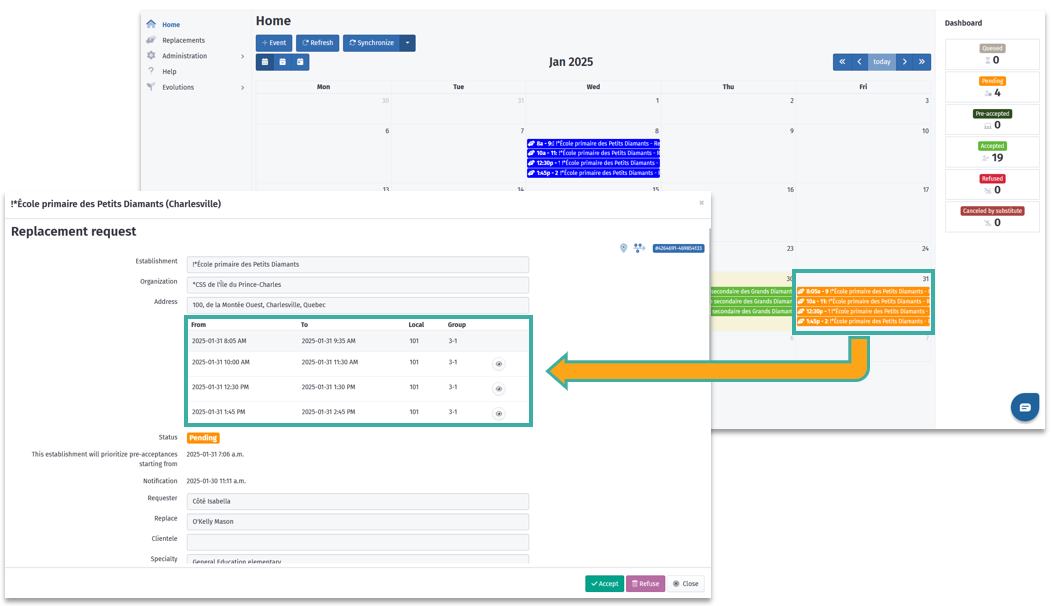
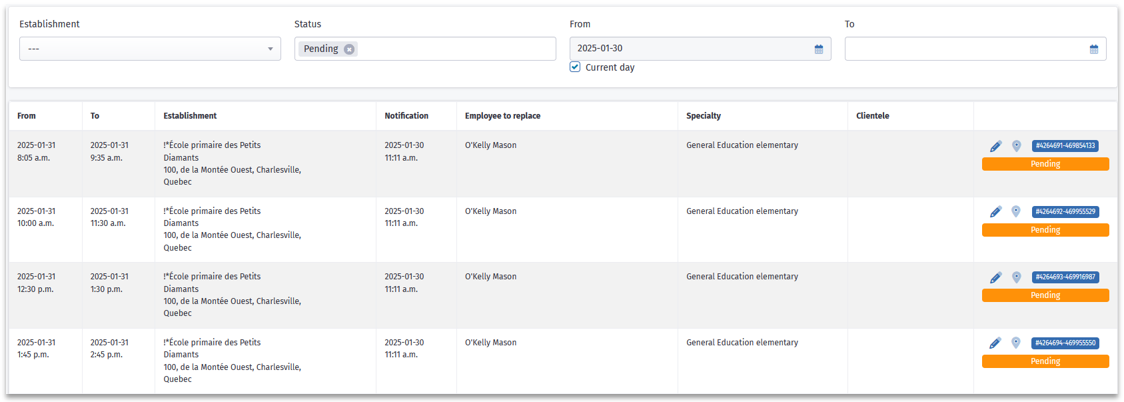
When a remplacement offer is published with multiple periods, they are grouped into a single offer. For example, an initial offer with four periods:
- 8h05 AM to 9h35 AM;
- 10h00 AM to 11h30 AM;
- 12h30 PM to 1h30 PM;
- 1h45 PM to 2h45 PM.
After fragmentation
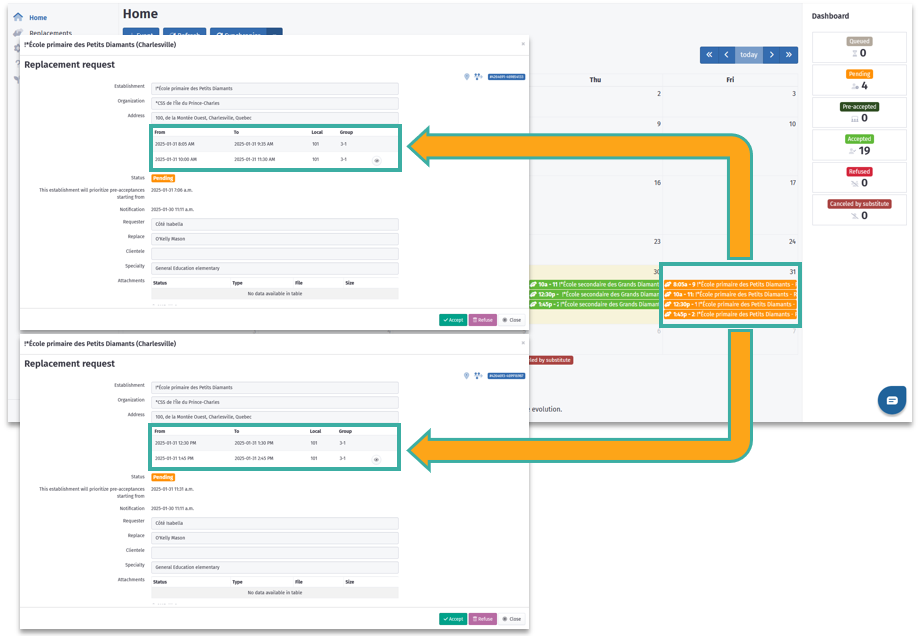
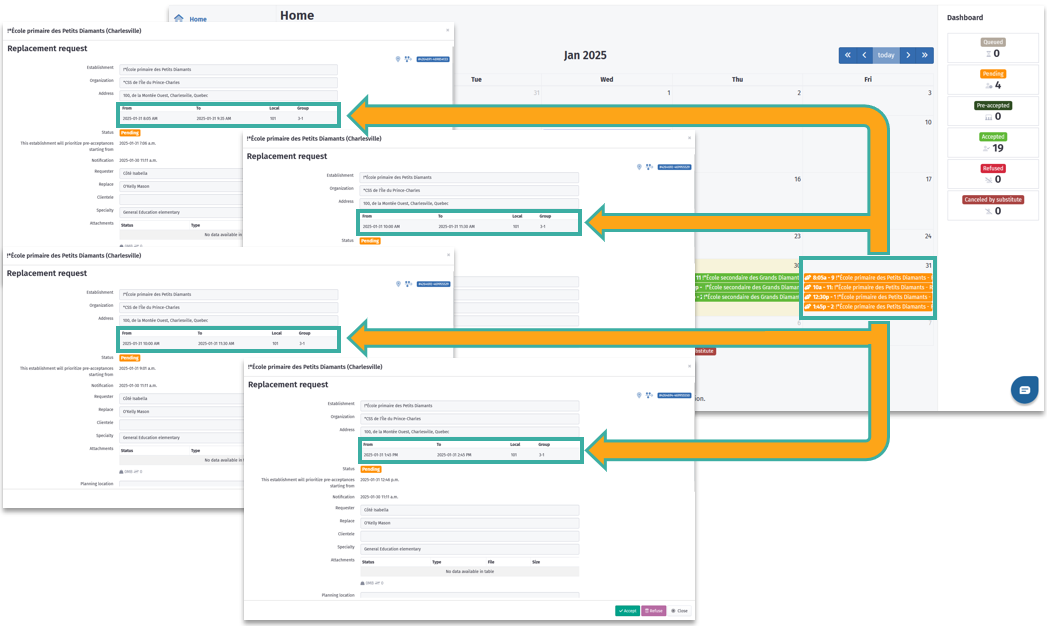
If no substitute is available to cover all the periods of an offer, fragmentation can be triggered. As a result, groups of periods or each period becomes a separate sub-offer.
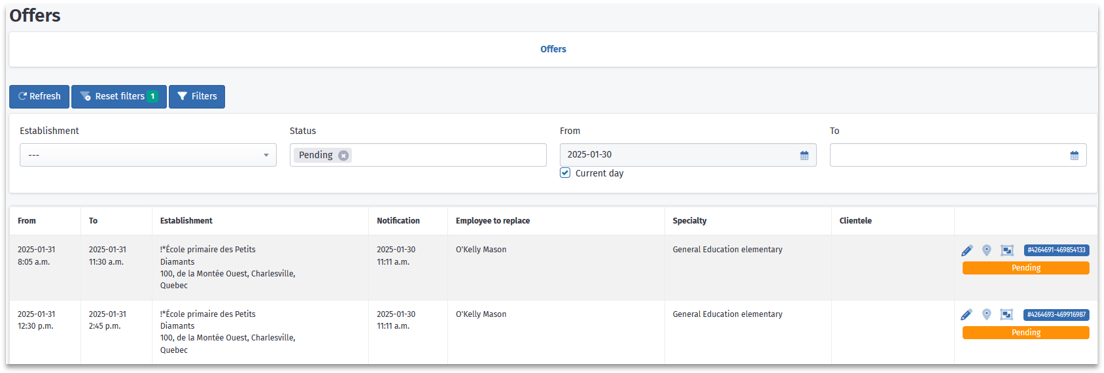
Indeed, the offer may split by day, half-day (one offer for the morning and a second offer for the afternoon) or by period.
Example after fragmentation by half-day:
| Example after fragmentation by period:
|
On the homepage, the substitute will still see all the available periods grouped together, but by clicking on it, they will notice that it has been fragmented into several parts and that one or more periods are available to them.
 |  | |
 |  |
Was this article helpful?
That’s Great!
Thank you for your feedback
Sorry! We couldn't be helpful
Thank you for your feedback
Feedback sent
We appreciate your effort and will try to fix the article